GLAZING FRAME OPTIONS
The divisions in the glass are one of the design elements that never seem to lose popularity. For centuries the divided lite patterns in a window or a door have been inherent to the design of the architecture.
There are two primary ways to divide the glass today. There is still a true division of the glass using multiple individual lites or there is a simulated division that can be used to create a similar appearance with better energy values. There are advantages with both approaches and each have different merits.
FEATURES INCLUDE
- Dual glaze - 1/4" individual panes with 5/8" air space for 1 1/8" over all glass thickness (**standard product).
- Triple glaze – 1 1/2" Over all glass thickness.
- Single glazed - 3/8" thick glass.
- Welded one-piece glazing frames.
- Glazing frames factory installed.
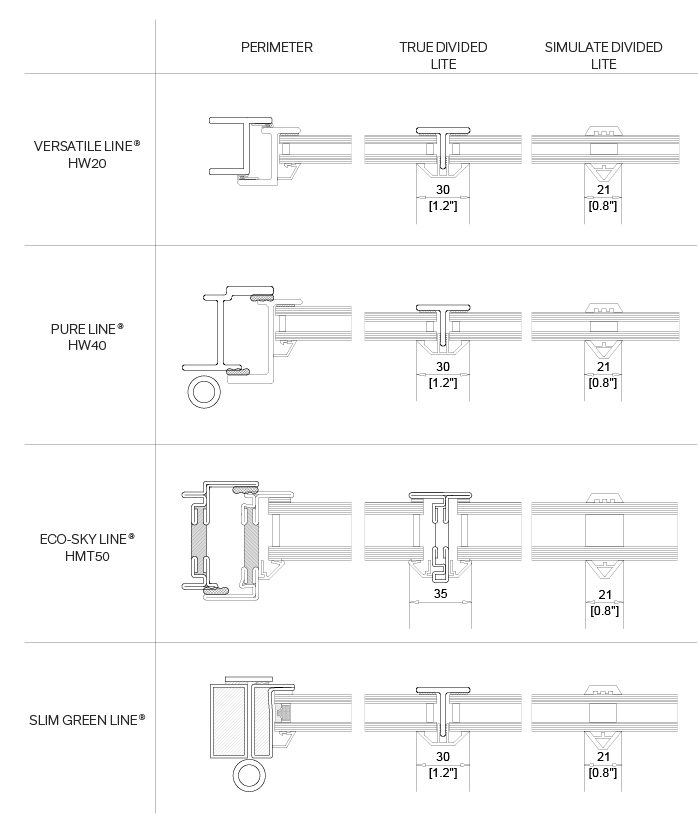
The Profile Is the Design Decision
Most of what people notice about a steel window is not the glass and not the color — it is the section of the frame and the way the glazing is held. Two units with identical dimensions and identical finish will read completely differently depending on the profile chosen and where the glass sits within it.
This is the part of the specification that is easiest to leave as a default and hardest to change later, because the profile is fabricated into the unit.
Sightline Width
The single most consequential choice. A narrower frame means more glass in the same rough opening and a unit that recedes into the architecture; a heavier section reads as structure and suits traditional and heritage work where the window should be visible as a made object.
Steel carries roughly three times the tensile strength of aluminum, which is what puts the narrow end of that range within reach at all — HERRERO profiles can be as slim as 1 inch. See the comparison. Our SLIM LINE and PURE lines are built around that end of the spectrum.
Glazing Bars and Divisions
Where a unit is divided, the bar profile sets its period and character. A fine bar dividing a large lite reads as contemporary; a heavier, shaped bar in a traditional rhythm places the window historically. On restoration work the bar shape is usually dictated by the original — see historical reproduction.
Thermal Break, and What It Does to the Profile
A thermally broken frame carries a continuous non-conductive polyamide inside the steel section, which necessarily changes its dimensions. This is the real trade-off in the specification: the narrowest possible sightline and the best thermal performance pull in opposite directions, and the right answer depends on the Title 24 calculation for that elevation.
Our ECO-SKY line exists to keep that compromise as small as possible. Read the architect’s guide to thermal breaks.
Specifying It
Profile, glazing bar, glass and finish are one decision, not four — each one constrains the others. Review glass options and finishes, then send us the elevation and we will tell you what the combination costs in sightline and in performance.